Buy ausrüstung.eu ?
We are moving the project
ausrüstung.eu .
Are you interested in purchasing the domain
ausrüstung.eu ?
domain@kv-gmbh.de · 0541-91531010
Buy ausrüstung.eu ?
Is the reactance proportional to the capacitance or the utilization of the capacitance?
The reactance is proportional to the utilization of the capacitance. In an AC circuit, the reactance of a capacitor is inversely proportional to the frequency of the AC signal and the capacitance of the capacitor. As the utilization of the capacitance increases, the reactance decreases, allowing more current to flow through the capacitor. Therefore, the reactance is directly related to the utilization of the capacitance in the circuit. **
What is the capacitance in electrostatics?
Capacitance in electrostatics is a measure of a system's ability to store electric charge and energy in an electric field. It is defined as the ratio of the amount of electric charge stored on a conductor to the potential difference across the conductor. The unit of capacitance is the farad (F), and it is represented by the symbol C. Capacitance is an important concept in electronics and electrical engineering, as it is used in the design and analysis of circuits and systems that involve the storage and release of electrical energy. **

Similar search terms for Capacitance
Top-Angebote
Products related to Capacitance:
-
Universal Stock Digital Clamp Multimeter With AC Current Voltage Capacitance And Resistance Tester Digital Clamp Multimeter With AC Current Voltage Capacitance And Resistance TesterGet faster, more convenient electrical troubleshooting without juggling multiple testing tools. This 1 pc of digital clamp multimeter combines essential measurement functions in a compact handheld design for electricians, automotive technicians, DIY...129,97 $*Shipping: 0,00 $Secure redirect to the provider
-
Uplift Curations Emergency Thermal Rain Poncho Waterproof Survival Poncho Blanket For Camping Hiking Outdoor Survival Gear orangeBe ready for sudden weather changes with a lightweight protective layer designed for emergencies. This thermal rain poncho combines the function of a waterproof raincoat and an insulating blanket to help keep you warm and dry in harsh outdoor...57,50 $*Shipping: 0,00 $Secure redirect to the provider
-
Multisell Products Hub Compact Monocular Telescope For Travel, Hiking, Fishing, Camping & Bird Watching 1pcDiscover the wonders of nature with the Monocular 1 pc Telescope, your perfect companion for outdoor adventures. Whether you're hiking, fishing, camping, or stargazing, this compact and portable telescope offers crystalclear views and is ideal for...29,97 $*Shipping: 0,00 $Secure redirect to the provider
-
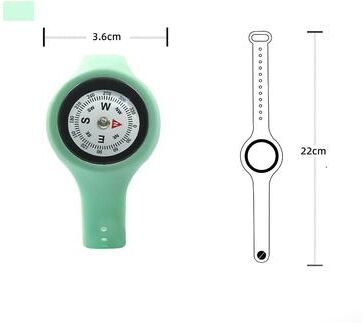
ModernMart Outdoor Wrist Compass Watch Survival Navigation Bracelet For Hiking Camping Travel dStay confident wherever your journey takes you with this reliable wrist compass watch designed for explorers of all ages. Built for outdoor adventures, this outdoor compass bracelet combines accurate navigation with everyday wearability. Whether...29,97 $*Shipping: 0,00 $Secure redirect to the provider


-
How do you calculate the capacitance C?
The capacitance C of a capacitor can be calculated using the formula C = Q/V, where Q is the charge stored on the capacitor and V is the voltage across the capacitor. Another way to calculate capacitance is by using the formula C = εA/d, where ε is the permittivity of the material between the capacitor plates, A is the area of the plates, and d is the distance between the plates. These formulas can be used to determine the capacitance of a capacitor in various electrical circuits and systems. **
-
How is it possible to achieve a total capacitance of 43C from 4 capacitors of equal capacitance C?
To achieve a total capacitance of 43C from 4 capacitors of equal capacitance C, the capacitors need to be connected in parallel. When capacitors are connected in parallel, the total capacitance is the sum of the individual capacitances. Therefore, by connecting the 4 capacitors in parallel, the total capacitance would be 4C. To reach a total capacitance of 43C, the value of C would need to be adjusted accordingly, such that 4C = 43C. **
-
What comes first: inductance, capacitance, current, or voltage?
In an electrical circuit, current is the flow of electric charge, so it is typically the first to be considered. Once current is established, the next factors to consider are voltage, which is the potential difference that drives the current, and then capacitance and inductance, which are properties that affect how the circuit responds to changes in voltage and current. So, the order of consideration is generally current, voltage, capacitance, and inductance. **
-
What is the capacitance C of a capacitor?
The capacitance C of a capacitor is a measure of its ability to store electric charge. It is defined as the ratio of the magnitude of the charge Q stored on one of its plates to the voltage V across the plates. Mathematically, it is expressed as C = Q/V. The unit of capacitance is the farad (F), which is equivalent to one coulomb per volt. The larger the capacitance of a capacitor, the more charge it can store for a given voltage. **

How do I calculate the capacitance of a capacitor?
To calculate the capacitance of a capacitor, you can use the formula C = Q/V, where C is the capacitance in farads, Q is the charge stored on the capacitor in coulombs, and V is the voltage across the capacitor in volts. Another way to calculate capacitance is by using the formula C = εA/d, where ε is the permittivity of the material between the capacitor plates, A is the area of the plates, and d is the distance between the plates. By using either of these formulas and the given values, you can determine the capacitance of the capacitor. **
How do you calculate the capacitance of a capacitor?
The capacitance of a capacitor is calculated using the formula C = Q/V, where C is the capacitance in farads, Q is the charge stored on the capacitor in coulombs, and V is the voltage across the capacitor in volts. The capacitance of a capacitor is a measure of its ability to store charge, and it is determined by the physical characteristics of the capacitor, such as its size, shape, and the material between its plates. The unit of capacitance is the farad, which is a large unit, so capacitors are often measured in microfarads (μF) or picofarads (pF). **
Top-Angebote
Products related to Capacitance:
-
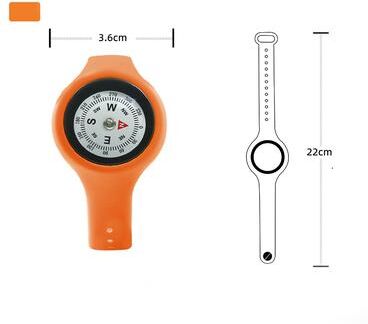
ModernMart Outdoor Wrist Compass Watch Survival Navigation Bracelet For Hiking Camping Travel bStay confident wherever your journey takes you with this reliable wrist compass watch designed for explorers of all ages. Built for outdoor adventures, this outdoor compass bracelet combines accurate navigation with everyday wearability. Whether...29,97 $*Shipping: 0,00 $Secure redirect to the provider
-
ModernMart Spovan Waterproof Fishing Barometer Watch For Hiking, Camping & Outdoor Sports Spovan Waterproof Fishing Barometer Watch For Hiking, Camping & Outdoor SportsNever miss the perfect fishing window again with this rugged fishing barometer watch designed for anglers and outdoor adventurers who rely on precision in changing conditions. Built with realtime pressure tracking, weather monitoring, and water...119,97 $*Shipping: 0,00 $Secure redirect to the provider
-
Universal Stock Digital Clamp Multimeter With AC Current Voltage Capacitance And Resistance Tester Digital Clamp Multimeter With AC Current Voltage Capacitance And Resistance TesterGet faster, more convenient electrical troubleshooting without juggling multiple testing tools. This 1 pc of digital clamp multimeter combines essential measurement functions in a compact handheld design for electricians, automotive technicians, DIY...129,97 $*Shipping: 0,00 $Secure redirect to the provider
-
Uplift Curations Emergency Thermal Rain Poncho Waterproof Survival Poncho Blanket For Camping Hiking Outdoor Survival Gear orangeBe ready for sudden weather changes with a lightweight protective layer designed for emergencies. This thermal rain poncho combines the function of a waterproof raincoat and an insulating blanket to help keep you warm and dry in harsh outdoor...57,50 $*Shipping: 0,00 $Secure redirect to the provider
-
Is the reactance proportional to the capacitance or the utilization of the capacitance?
The reactance is proportional to the utilization of the capacitance. In an AC circuit, the reactance of a capacitor is inversely proportional to the frequency of the AC signal and the capacitance of the capacitor. As the utilization of the capacitance increases, the reactance decreases, allowing more current to flow through the capacitor. Therefore, the reactance is directly related to the utilization of the capacitance in the circuit. **
-
What is the capacitance in electrostatics?
Capacitance in electrostatics is a measure of a system's ability to store electric charge and energy in an electric field. It is defined as the ratio of the amount of electric charge stored on a conductor to the potential difference across the conductor. The unit of capacitance is the farad (F), and it is represented by the symbol C. Capacitance is an important concept in electronics and electrical engineering, as it is used in the design and analysis of circuits and systems that involve the storage and release of electrical energy. **
-
How do you calculate the capacitance C?
The capacitance C of a capacitor can be calculated using the formula C = Q/V, where Q is the charge stored on the capacitor and V is the voltage across the capacitor. Another way to calculate capacitance is by using the formula C = εA/d, where ε is the permittivity of the material between the capacitor plates, A is the area of the plates, and d is the distance between the plates. These formulas can be used to determine the capacitance of a capacitor in various electrical circuits and systems. **
-
How is it possible to achieve a total capacitance of 43C from 4 capacitors of equal capacitance C?
To achieve a total capacitance of 43C from 4 capacitors of equal capacitance C, the capacitors need to be connected in parallel. When capacitors are connected in parallel, the total capacitance is the sum of the individual capacitances. Therefore, by connecting the 4 capacitors in parallel, the total capacitance would be 4C. To reach a total capacitance of 43C, the value of C would need to be adjusted accordingly, such that 4C = 43C. **
Similar search terms for Capacitance
-
Multisell Products Hub Compact Monocular Telescope For Travel, Hiking, Fishing, Camping & Bird Watching 1pcDiscover the wonders of nature with the Monocular 1 pc Telescope, your perfect companion for outdoor adventures. Whether you're hiking, fishing, camping, or stargazing, this compact and portable telescope offers crystalclear views and is ideal for...29,97 $*Shipping: 0,00 $Secure redirect to the provider
-
ModernMart Outdoor Wrist Compass Watch Survival Navigation Bracelet For Hiking Camping Travel dStay confident wherever your journey takes you with this reliable wrist compass watch designed for explorers of all ages. Built for outdoor adventures, this outdoor compass bracelet combines accurate navigation with everyday wearability. Whether...29,97 $*Shipping: 0,00 $Secure redirect to the provider
-
ModernMart Outdoor Wrist Compass Watch Survival Navigation Bracelet For Hiking Camping Travel aStay confident wherever your journey takes you with this reliable wrist compass watch designed for explorers of all ages. Built for outdoor adventures, this outdoor compass bracelet combines accurate navigation with everyday wearability. Whether...29,97 $*Shipping: 0,00 $Secure redirect to the provider
-
ModernMart Outdoor Wrist Compass Watch Survival Navigation Bracelet For Hiking Camping Travel eStay confident wherever your journey takes you with this reliable wrist compass watch designed for explorers of all ages. Built for outdoor adventures, this outdoor compass bracelet combines accurate navigation with everyday wearability. Whether...29,97 $*Shipping: 0,00 $Secure redirect to the provider
-
What comes first: inductance, capacitance, current, or voltage?
In an electrical circuit, current is the flow of electric charge, so it is typically the first to be considered. Once current is established, the next factors to consider are voltage, which is the potential difference that drives the current, and then capacitance and inductance, which are properties that affect how the circuit responds to changes in voltage and current. So, the order of consideration is generally current, voltage, capacitance, and inductance. **
-
What is the capacitance C of a capacitor?
The capacitance C of a capacitor is a measure of its ability to store electric charge. It is defined as the ratio of the magnitude of the charge Q stored on one of its plates to the voltage V across the plates. Mathematically, it is expressed as C = Q/V. The unit of capacitance is the farad (F), which is equivalent to one coulomb per volt. The larger the capacitance of a capacitor, the more charge it can store for a given voltage. **
-
How do I calculate the capacitance of a capacitor?
To calculate the capacitance of a capacitor, you can use the formula C = Q/V, where C is the capacitance in farads, Q is the charge stored on the capacitor in coulombs, and V is the voltage across the capacitor in volts. Another way to calculate capacitance is by using the formula C = εA/d, where ε is the permittivity of the material between the capacitor plates, A is the area of the plates, and d is the distance between the plates. By using either of these formulas and the given values, you can determine the capacitance of the capacitor. **
-
How do you calculate the capacitance of a capacitor?
The capacitance of a capacitor is calculated using the formula C = Q/V, where C is the capacitance in farads, Q is the charge stored on the capacitor in coulombs, and V is the voltage across the capacitor in volts. The capacitance of a capacitor is a measure of its ability to store charge, and it is determined by the physical characteristics of the capacitor, such as its size, shape, and the material between its plates. The unit of capacitance is the farad, which is a large unit, so capacitors are often measured in microfarads (μF) or picofarads (pF). **
* All prices are inclusive of VAT and, if applicable, plus shipping costs. The offer information is based on the details provided by the respective shop and is updated through automated processes. Real-time updates do not occur, so deviations can occur in individual cases. ** Note: Parts of this content were created by AI.